
Effective collaboration is the backbone of any successful team, but too often, it’s slowed down by disconnected tools, endless email threads, and scattered information. Read on to learn more.
Let’s be honest. Agency life isn’t exactly known for its downtime. Between chasing approvals, wrangling spreadsheets, launching marketing campaigns, and reporting on last month’s results while already preparing for next week’s pitch, teams are stretched thin. The work is not just fast-paced. It is nonstop.
Clients want more. Timelines shrink. Budgets tighten. Meanwhile, your smartest people spend their days buried in repetitive tasks, instead of shaping strategy, refining marketing content, or pushing creative boundaries.
This is where media agency process automation comes into play. Not as a silver bullet or a flashy tech experiment, but as a practical, behind-the-scenes enabler. Done well, automation eliminates operational clutter so teams can focus on what drives results: sharper storytelling, stronger ideas, and better client relationships. In other words, the work clients pay for (Exploding Topics, 2024).
Let’s set expectations early. Automation is not about replacing talent. It is about protecting it. Smart workflow management allows agencies to scale proven processes without forcing teams to reinvent the wheel on every brief or burn out halfway through the year.
In this article, we’ll explore practical ways to implement AI media agency process automation. We’ll highlight workflows that consume the most time, cause the most friction, and deliver the least value when handled manually. Because in today’s agency landscape, efficiency is not a nice-to-have. It is the cost of staying competitive (Market.biz, 2025).
What Media Agency Process Automation Really Means in 2026
Before we talk about the benefits, it is worth clarifying what automation actually means in a modern agency context.
Media agency process automation goes far beyond simple triggers or task reminders. It relies on AI-driven automation systems that can follow logic, respond to context, and manage complex, repeatable workflows with minimal manual intervention. These automation workflows run end to end, handling execution, exceptions, and escalation so teams are no longer tied up in operational busywork (Market Data Report, 2026).
To illustrate, practical use cases include lead qualification, campaign reporting, SEO audits, contract reviews, and data validation. While these are critical, when tackled manually, they consume time without delivering proportional strategic value (inBeat Agency, 2025).
What has changed, and why this matters now, is the maturity of AI marketing automation powered by agentic systems. Unlike traditional marketing automation, which focuses on predefined rules, modern automation platforms can adapt to changing inputs, interpret unstructured data, and improve performance over time using machine learning and natural language processing (Market.biz, 2025).

In practical terms, this means agencies can automate entire processes rather than isolated steps. What once required custom development or specialist technical teams is now accessible through modern automation platforms designed for business users. Tools like Capably enable the quick deployment of intelligent workflows, scaling them as needs evolve, and integrating them across existing marketing platforms and CRM systems (Exploding Topics, 2024).
The timing matters. While many agencies still rely on manual processes to manage growth, others are quietly using automation to gain structural advantages: faster delivery, more reliable reporting, deeper insights, and more consistent customer experiences (Market Data Report, 2026).
Automation is not coming for your jobs. It is coming for the bottlenecks that slow teams down and limit how effectively agencies can operate at scale (inBeat Agency, 2025).
The Business Case: Where Automation Actually Pays Off
For agency leaders, automation only matters if it delivers measurable outcomes. Faster workflows are useful, but what ultimately counts is revenue performance, operational scale, and the ability to deliver consistently strong customer experiences without burning out your team.
When implemented well, media agency process automation creates value across three critical dimensions: growth, execution, and people.
1. Growth, Revenue, and Pipeline Quality
By removing manual, time‑intensive work from revenue‑facing teams, media agency process automation directly supports business growth. Instead of spending hours cleaning data or qualifying prospects by hand, teams can focus on shaping offers, improving marketing campaigns, and building relationships that convert (Salesforce, n.d).
Marketing automation improves lead management and revenue outcomes. Companies that adopt automation tools frequently report higher conversion rates and more personalized customer engagement, which are linked to stronger pipeline performance (Oracle, 2024).
Automation enables more effective lead scoring and lead nurturing by evaluating prospects in real time based on engagement, fit, and intent. When integrated with CRM platforms and customer relationship management processes, this creates cleaner pipelines and shorter sales cycles (Adobe Marketo Engage Marketing Automation, 2025).
The result is not just more leads, but better ones. Agencies often see measurable improvements in lead quality and overall marketing productivity when automation is applied to critical processes (IBM, 2025).
2. Operational Scale and Performance Visibility
Automation also transforms how agencies operate on a daily basis. Repetitive manual work introduces delays, errors, and bottlenecks that compound as client volume grows. Intelligent workflow management replaces fragmented processes with consistent, repeatable automation workflows that scale without adding overhead.
Automating data collection and reporting workflows gives teams real‑time access to consolidated performance metrics. Shared analytics dashboards and standardized report generation improve visibility and help teams make faster, data‑driven decisions. These capabilities are core benefits of workflow automation in digital business contexts (IBM, 2025).
Automation supports smarter campaign optimization and stronger marketing analytics by surfacing trends that are difficult to detect manually. Faster insights help agencies pivot quickly and optimize resource allocation across channels, leading to improved outcomes and reduced risk.
3. Team Capacity and Customer Experience
Finally, automation protects the most valuable asset in any agency: its people. Manual processes increase context switching, extend working hours, and limit the time teams can spend on creative and strategic work.
By automating routine tasks across operations, reporting, and marketing functions, agencies improve internal efficiency while delivering more consistent customer experiences. Personalized touchpoints across the customer journey become easier to manage, whether through targeted email campaigns or coordinated social engagement.
Integrated automation tools allow teams to focus on high‑value activities while freeing up time previously spent on repetitive tasks (Oracle, 2024). Over time, improved efficiency and consistency strengthen client relationships and support long‑term loyalty.
How to Set Up Media Agency Process Automation (Practical Guide)
When it comes to AI in advertising agencies, the biggest risk with automation is not choosing the wrong tool. It is automating the wrong process, too early, with poor data underneath it. The goal is not speed for its own sake. It is repeatability, reliability, and measurable impact.
A practical setup approach can be broken into five manageable steps.
1. Start With Workflow Reality, Not Aspirations
Before touching any automation platforms, agency leaders need a clear view of how work actually gets done today. This means documenting real workflows, not ideal ones.
Focus on processes that are:
Repetitive
Rules-based
High-volume
Low in strategic differentiation
This is where workflow management matters most. Campaign reporting, lead handoff, invoice approvals, content approvals, and CRM workflows are often better starting points than creative or strategy-heavy work.
If a workflow changes every week, it is not ready for automation. If it looks the same every time, it probably is.
2. Get Your Data Foundations in Order
Automation amplifies whatever data it touches. Clean data scales well. Messy data scales mistakes.
Before deploying media agency process automation, review where customer data lives and how it moves between systems. This typically includes CRM platforms, email tools, analytics tools, and ad platforms.
Key questions for leadership:
Is CRM data consistently structured?
Are fields standardized across teams?
Do marketing organizations trust the numbers they see?
Strong marketing data governance ensures automation systems pull from reliable sources and respect access controls, privacy, and client data boundaries. This also supports digital security, which becomes more important as automation touches more systems.
3. Design Automation With Humans in the Loop
Not every step should be automated end to end. In many cases, the most effective approach is partial automation with review points.This is especially true for:
Content creation and content distribution
Client-facing reports
Budget-sensitive media buying decisions
Email workflows tied to sales outreach or customer service
Well-designed automation workflows include checkpoints for approval, escalation, or exception handling. This protects quality while still removing the repetitive groundwork that slows teams down.It also helps teams trust the system, which is critical for long-term adoption in marketing.
4. Choose Automation Platforms That Fit Your Operating Model
Once workflows and data are clear, selecting the right automation platform becomes easier. For most agencies, flexibility matters more than technical depth.Look for platforms that support:
No-code or low-code configuration
Integration with existing marketing platforms
Support for AI-driven marketing use cases
Scalable workflow management across teams
Modern platforms increasingly rely on generative AI and machine learning to handle unstructured inputs like documents, briefs, and free-text feedback. This allows automation to extend beyond simple task routing into areas like content generation, report drafting, and insight summarization.
5. Measure Impact and Manage Change Intentionally
Automation should be treated as a business initiative, not a side project. That means measuring outcomes and managing change deliberately.Key metrics often include:
Time saved per workflow
Error reduction
Faster report generation
Improved performance tracking
Qualitative customer feedback
This is where reporting tools and analytics dashboards help leadership connect automation to outcomes such as efficiency, quality, and client satisfaction. Just as importantly, clear change management ensures teams understand why automation exists and how it supports their work.Automation succeeds when marketing leaders treat it as part of how the agency operates, not something layered on top.
Top Processes to Automate in Your Media Agency
Not every task in an agency should be automated. Creative judgment, strategic thinking, and relationship-building still require a human touch. But many operational processes are ideal candidates for automation, especially when they repeat at scale.
The workflows below represent the highest-impact opportunities for media agency process automation today. They are not the work your agency is known for. They are the work that quietly slows everything else down.
Thanks to modern automation platforms, agencies no longer need developers or long implementation cycles to automate these processes. With the right tools, teams can design and deploy reliable workflows that support growth without adding complexity.
There are two ways to get started:
Choose from the Workflow Library: Prebuilt, agent-powered automations for everything from sales follow-ups and client onboarding to reporting and invoicing. Just answer a few prompts (what, when, where) and your automation is ready to go.
Or build your own: Custom workflows, no code required, thanks to the “Describe–Criticize–Automate” pattern. Designed around how your team already works, but now with agents to handle the repetitive, time-intensive parts.
Let’s take a look at where that value shows up first.
Client Acquisition, Lead Management, and Growth
Winning new business depends on speed, relevance, and follow-through. Yet many agencies still rely on manual processes to manage lead intake, qualification, and outreach. This is where marketing automation delivers immediate value.
Lead Generation and Qualification
Instead of manually scrubbing lists or reviewing inbound forms one by one, agencies can automate lead discovery, enrichment, and qualification. Integrated with CRM systems, automation supports structured lead scoring based on engagement, industry fit, and intent signals.
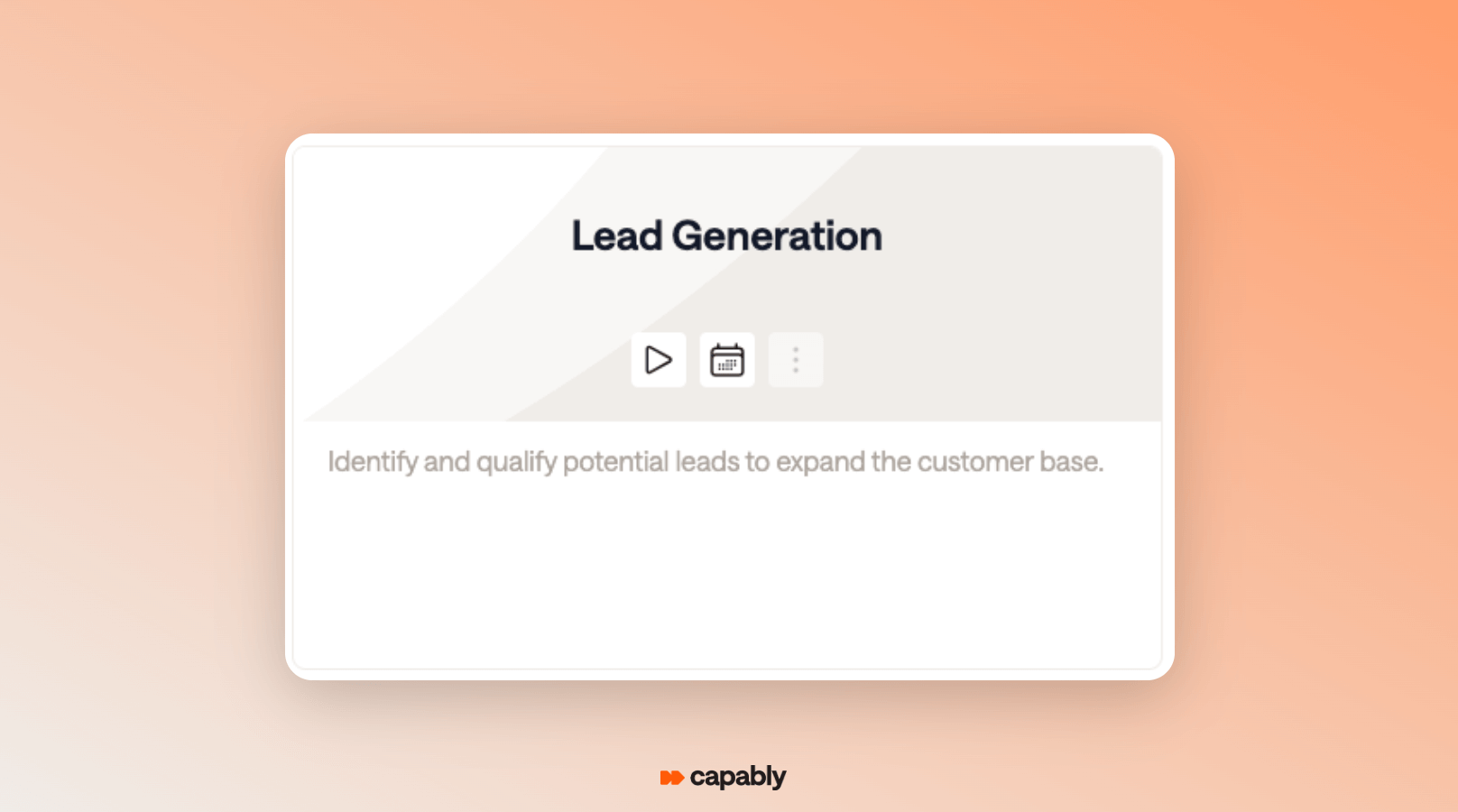
This creates a stronger foundation for lead nurturing, ensuring prospects receive timely, relevant follow-ups through coordinated email marketing and outbound touchpoints. It also supports more effective demand generation and Account-based marketing efforts by aligning outreach with real buying signals.
The result? A fuller pipeline, faster outreach, and fewer dead ends.
Market Research and Company Insights
Manual desk research is slow and inconsistent. Automation enables agencies to collect, summarize, and refresh company insights continuously.
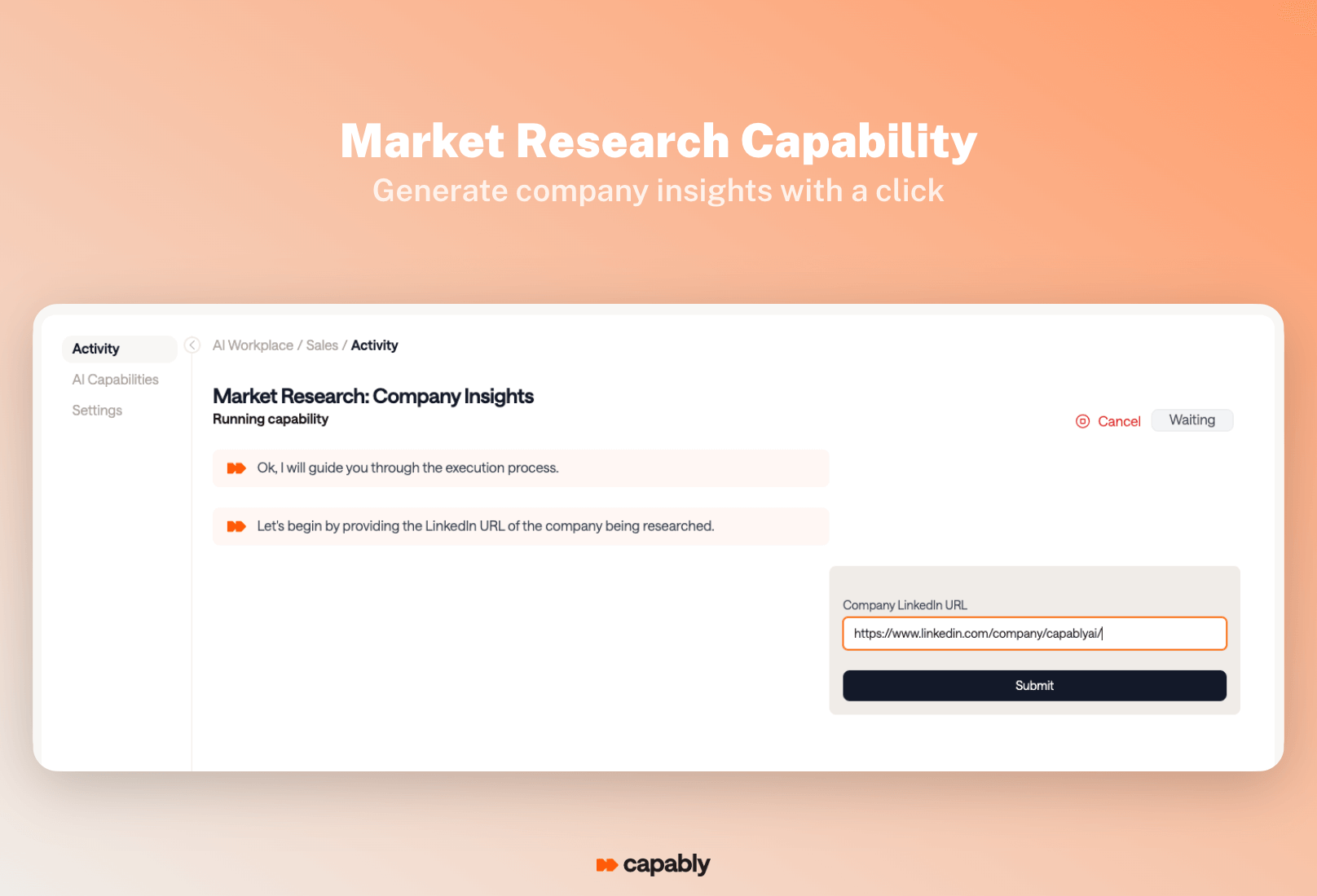
AI-powered workflows can pull public data, analyze positioning, and surface competitive context using structured and unstructured sources. This supports smarter prospecting and improves the relevance of marketing plans before the first conversation even begins.
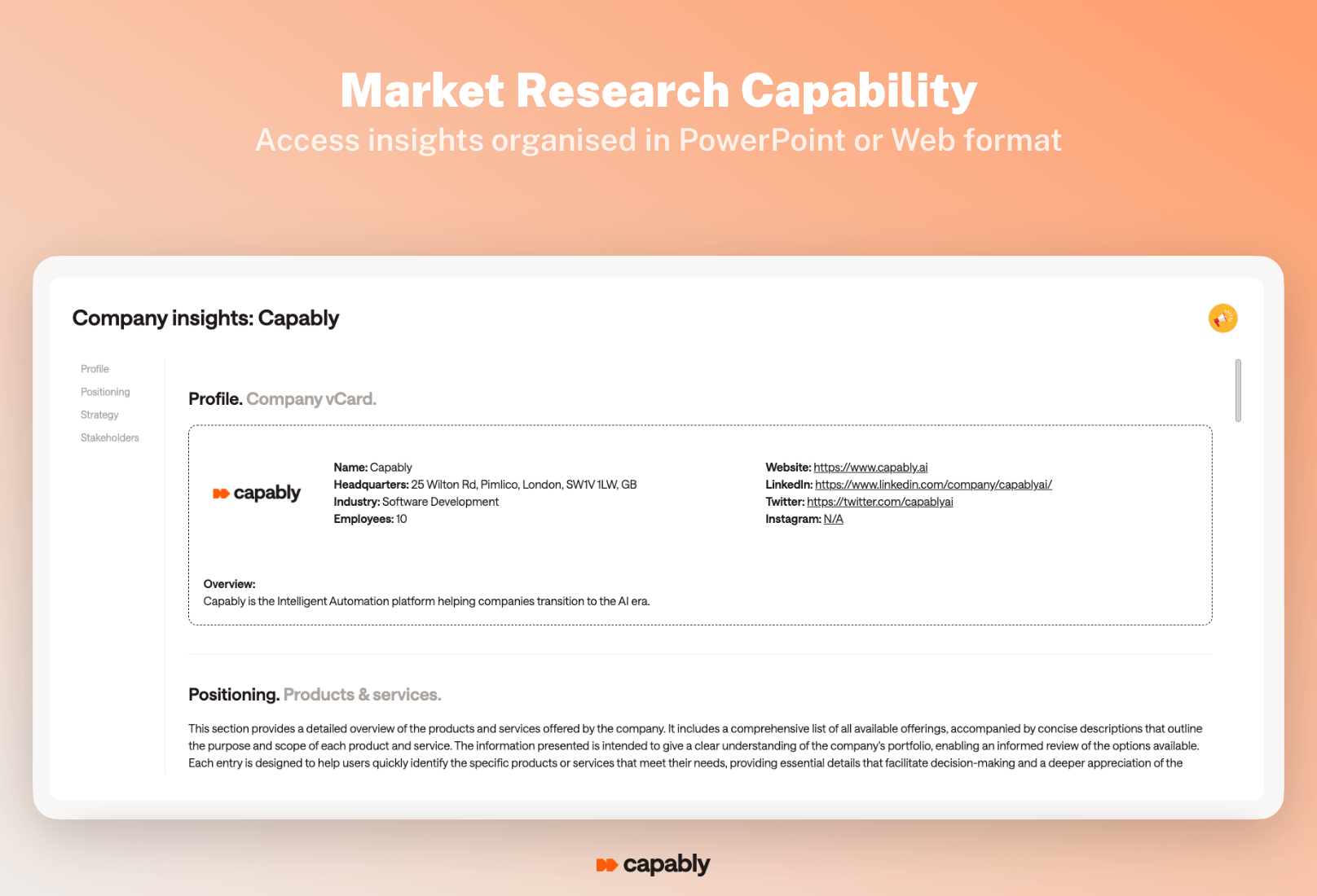
The result is better preparation, stronger pitches, and less time spent chasing background information.
Trend Analysis and Signal Monitoring
Staying ahead of trends requires constant monitoring across channels. Automation systems can track industry news, competitor activity, and social media signals to identify emerging opportunities.
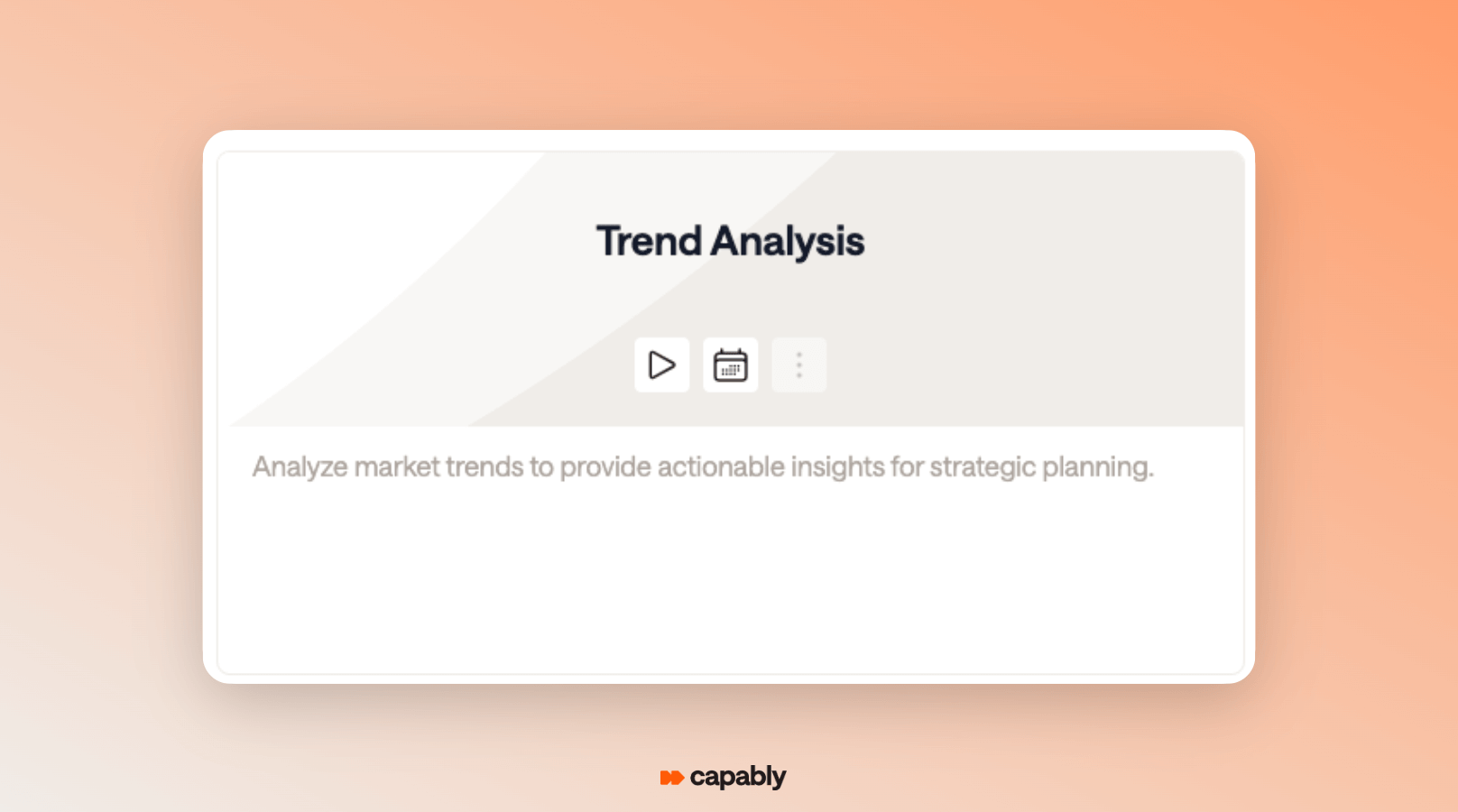
Instead of relying on ad hoc research, teams receive curated insights that support proactive outreach and more relevant marketing campaigns.
Operations and Administrative Workflows
Operations may not generate revenue directly, but they influence how efficiently agencies deliver value. Manual ops processes introduce friction, delays, and risk.
Invoice Processing and Financial Workflows
Automated invoice processing reduces manual checks, accelerates approvals, and improves accuracy. By connecting invoices to contracts and financial systems, agencies reduce payment delays and maintain cleaner records.
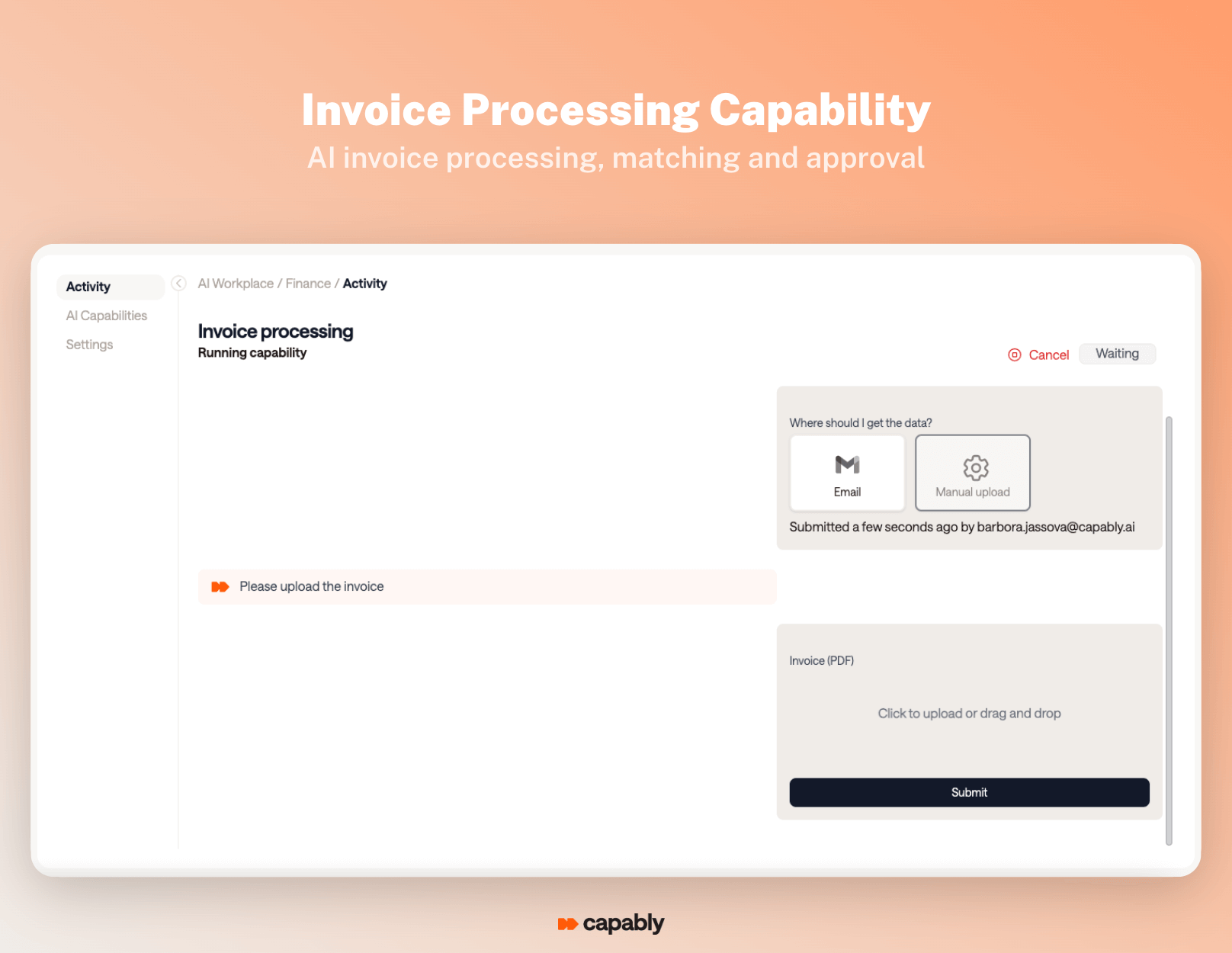
This is a clear example of workflow management improving reliability without changing how teams work day to day.
Contract Review and Document Processing
Contract analysis and intelligent document processing help agencies extract key terms, deadlines, and obligations without manual review. This reduces risk while improving turnaround times.
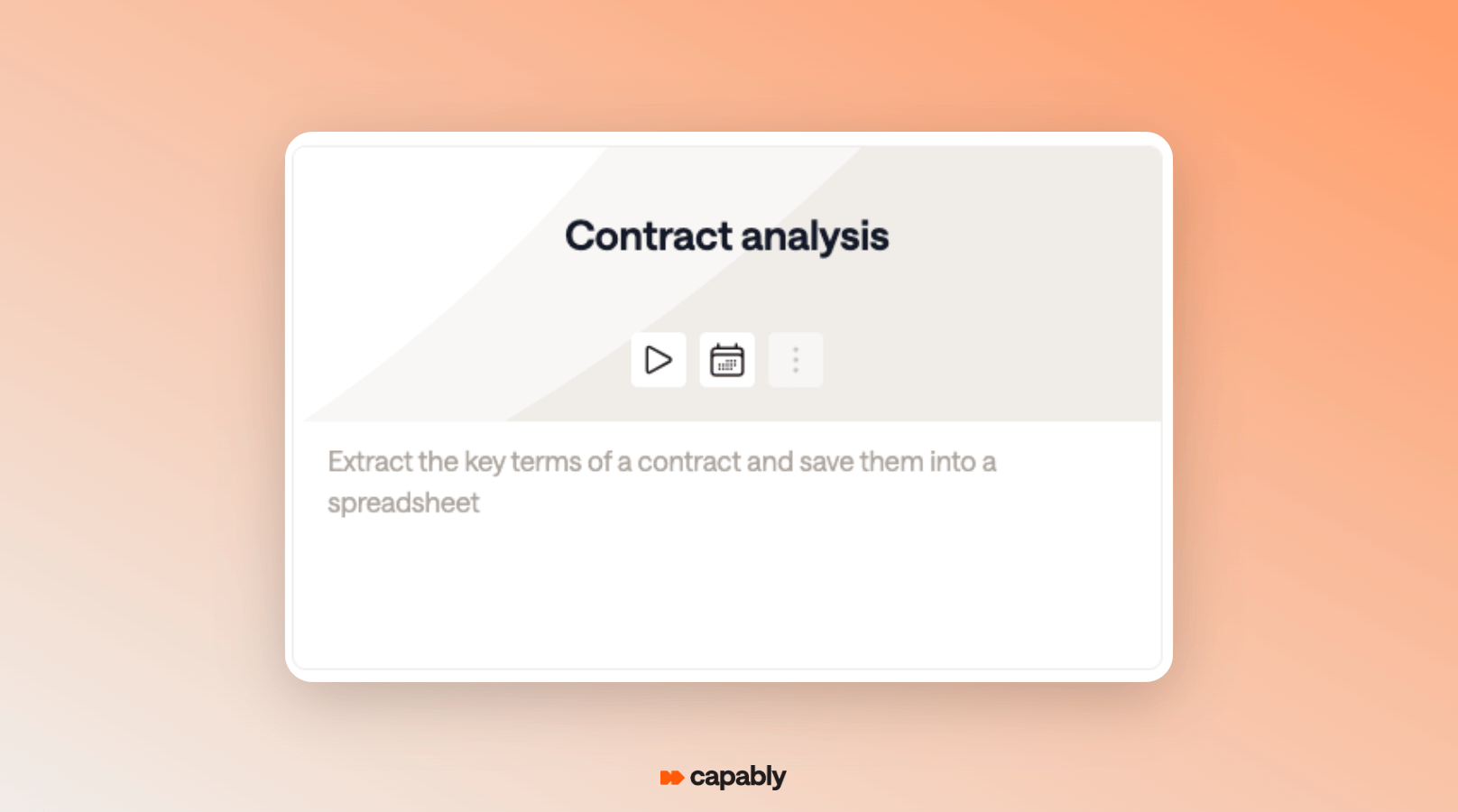
Automated document workflows also support better data integration tools, ensuring extracted information flows cleanly into reporting and CRM workflows.
Fact-Checking and Quality Control
Automation can support fact-checking by validating claims against trusted sources and flagging inconsistencies before content is published or shared.
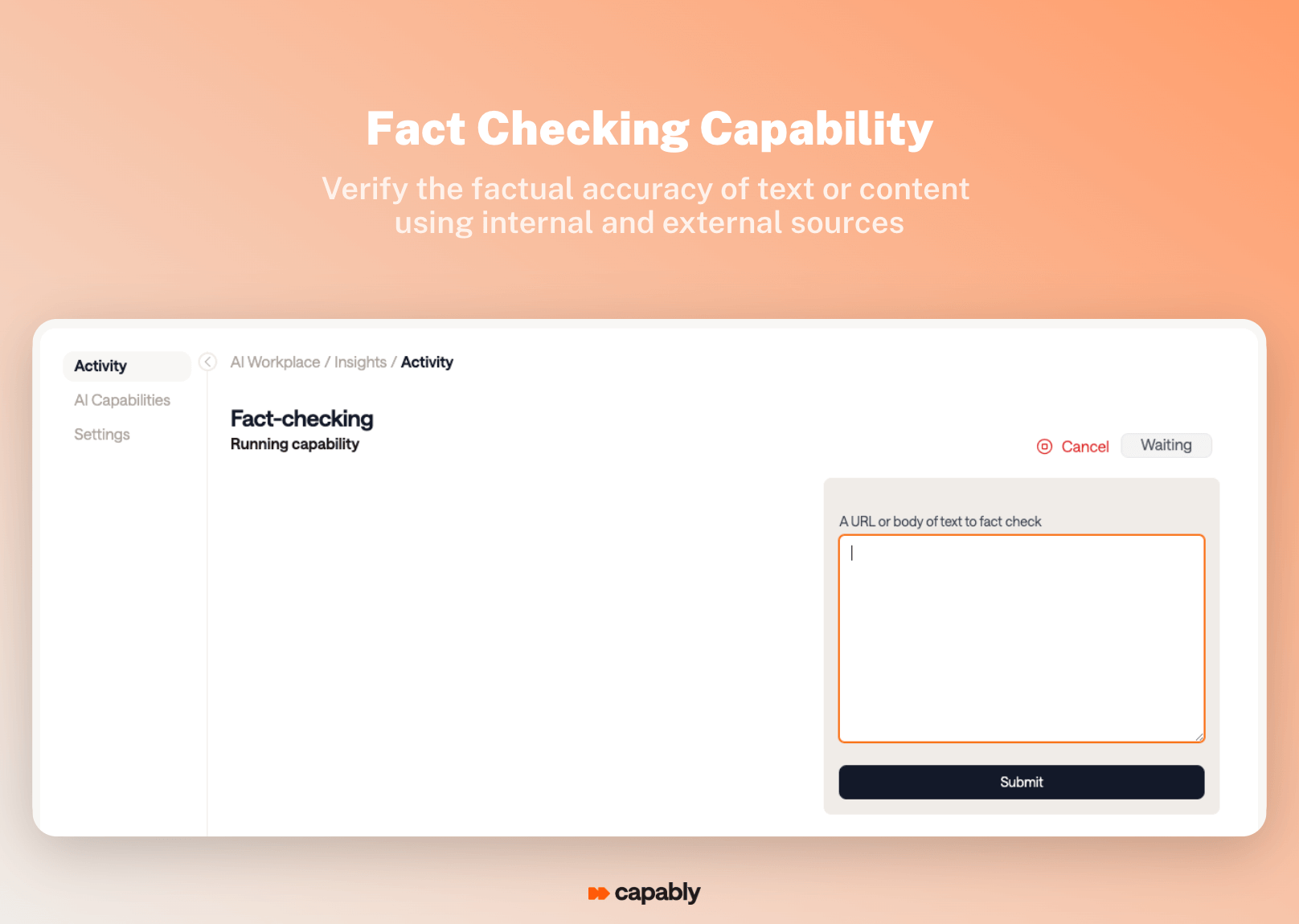
This protects credibility while reducing manual review time.
Campaign Execution, Analytics, and Optimization
Once campaigns are live, speed and visibility matter. Automation enables agencies to manage complexity across channels while maintaining consistency.
Ad Operations and Media Execution
Automated AdOps workflows support faster campaign launches, standardized tracking, and cleaner execution across digital ads and programmatic advertising channels.
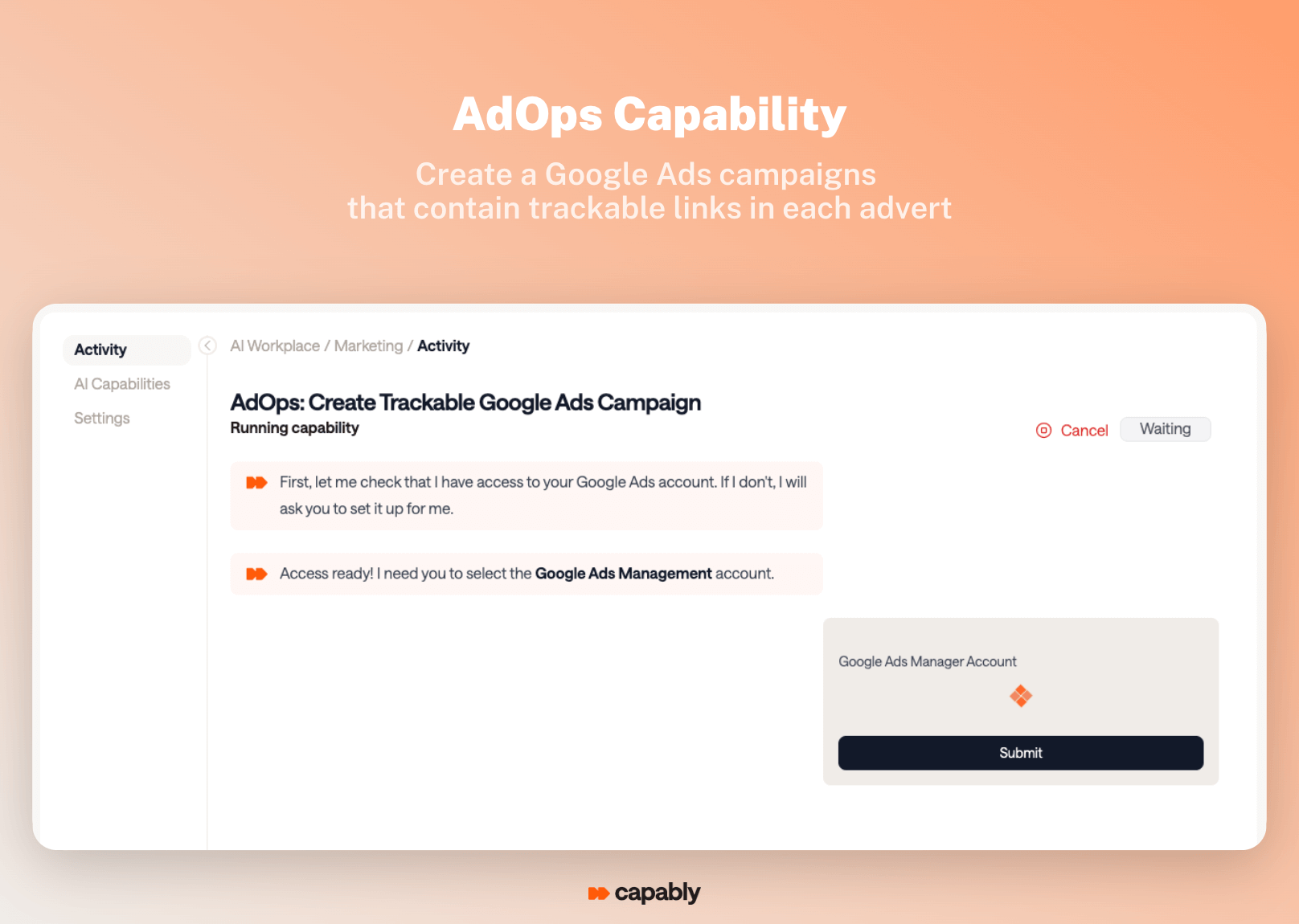
By automating setup and validation, agencies reduce errors and gain more reliable performance data from day one. With Capably's workflow automation, you can create Google Ads campaigns preloaded with trackable links. Every click is accounted for, and every ad is campaign-ready from the start. No more starting from scratch or missing a tag that throws off reporting.
The result: faster launches, fewer mistakes, and performance data you can trust from day one.
Campaign Reporting and Performance Insights
Automated report generation transforms raw data into client-ready insights. Instead of manually compiling numbers, teams can focus on interpretation and recommendations.
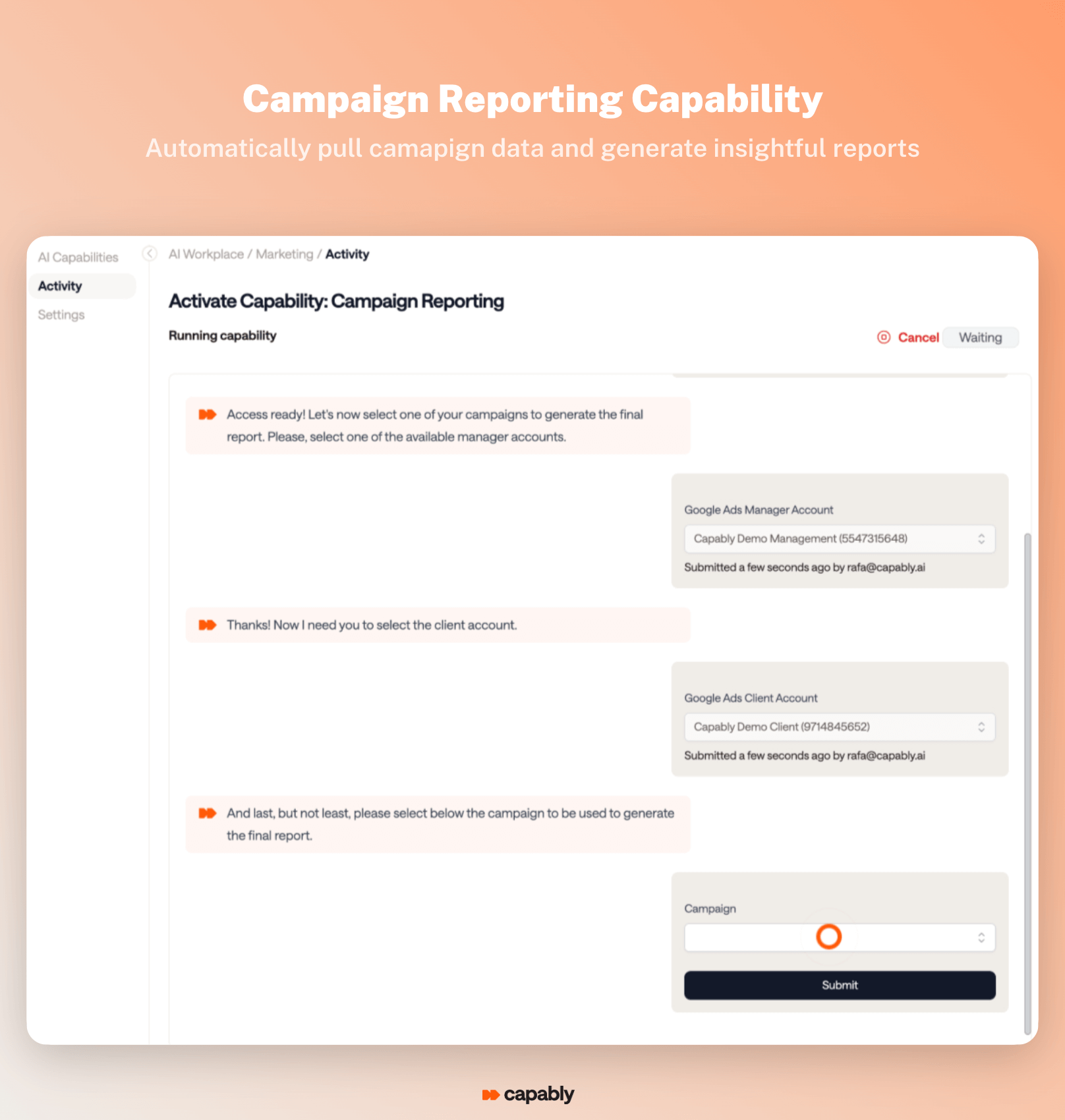
With shared reporting tools, leadership gains consistent visibility across accounts, supporting better performance tracking and decision-making.
You can see what’s working, what’s not, and how it ties to client business goals instantly.
Better yet, the platform allows you to export it as a polished PowerPoint or a live web page. No formatting marathons required.
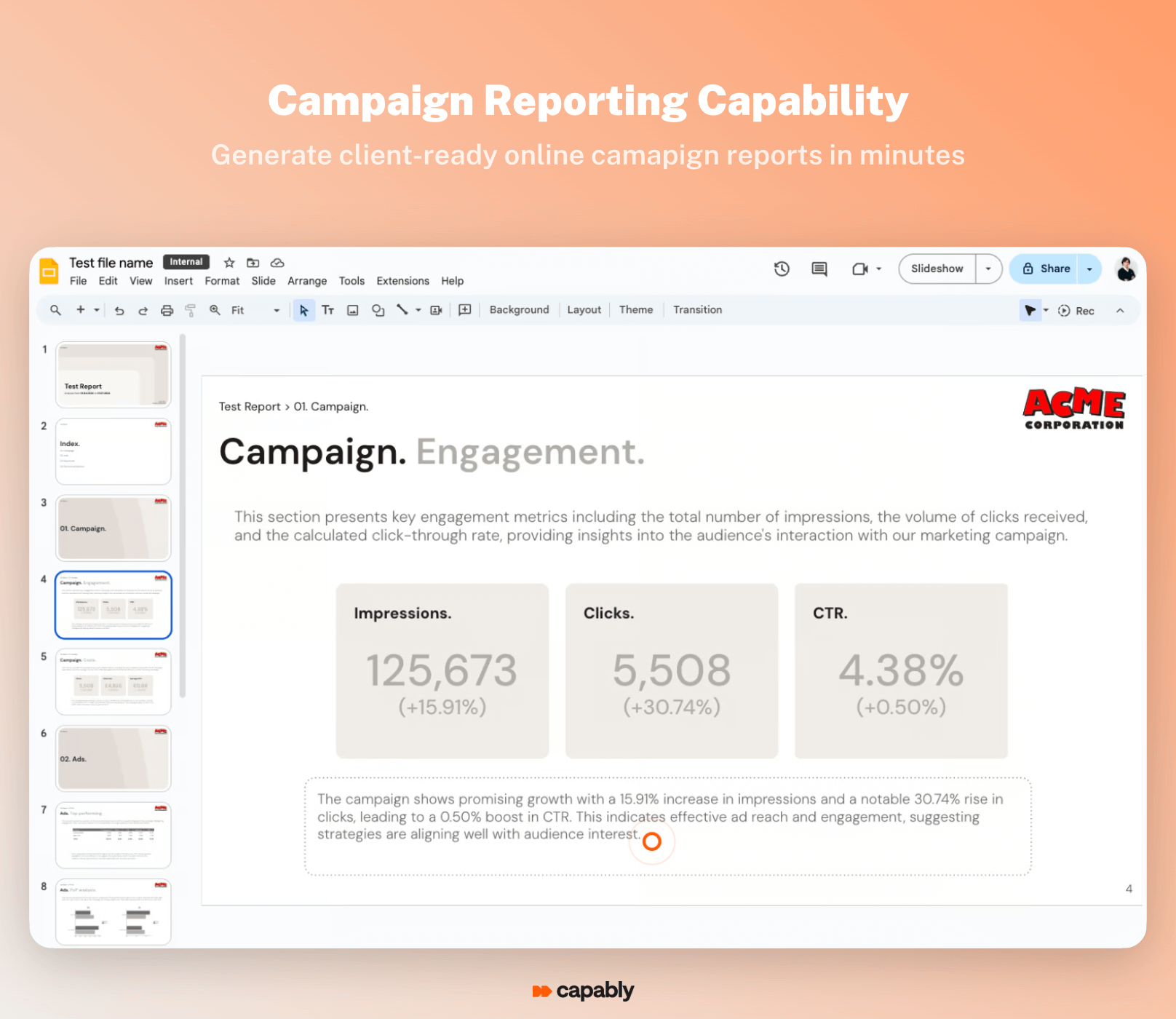
Less manual work, more advanced analytics—and a tighter feedback loop for team communication.
SEO and Content Performance
Automation supports ongoing SEO marketing by monitoring rankings, technical issues, and backlink monitoring without manual sweeps. This allows teams to respond faster and maintain performance over time.
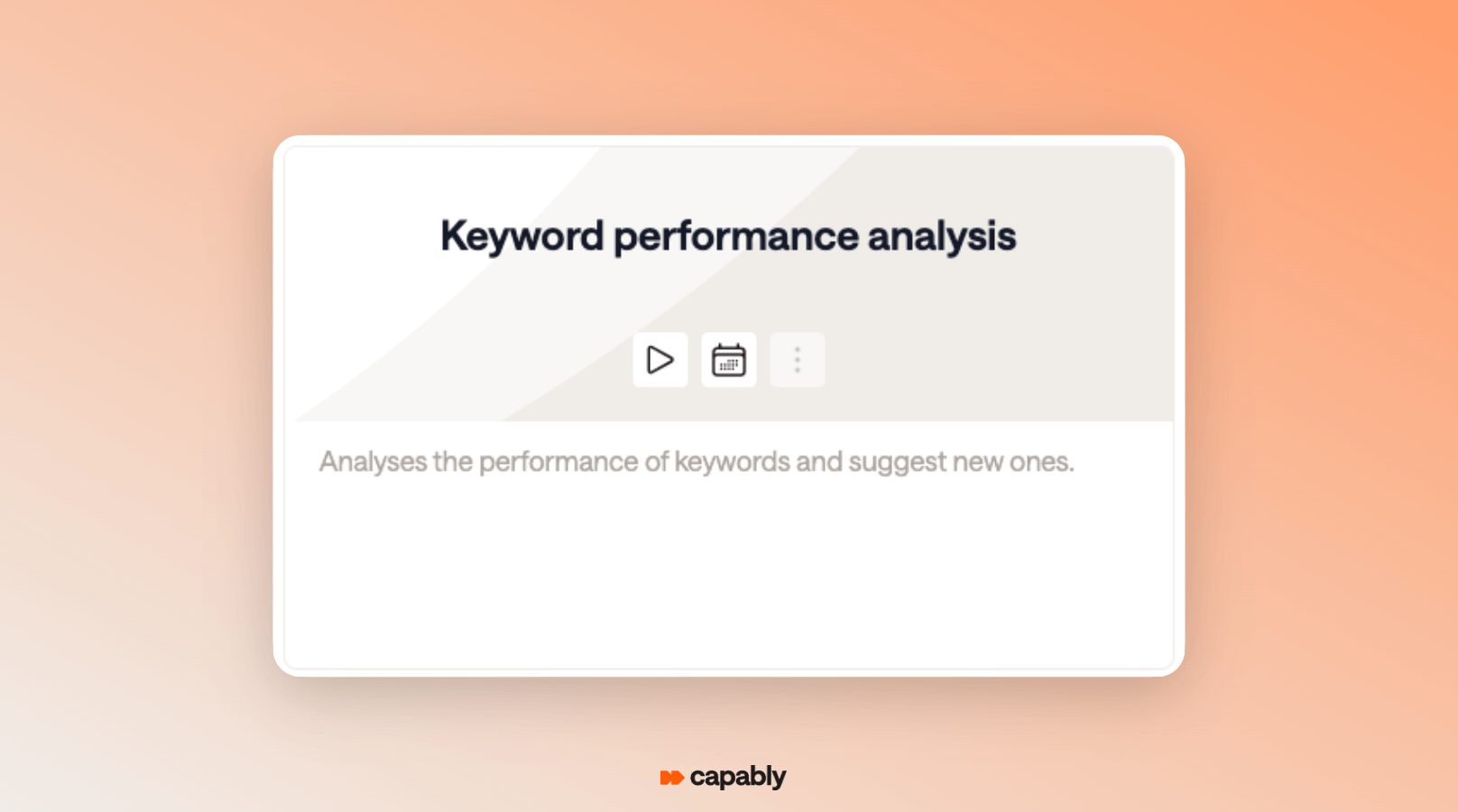
It also improves content production by aligning insights with content creation priorities.
Media Planning
Turning a campaign brief into a fully fleshed-out media plan is about giving practical structure to the creative process. Traditionally, this requires hours of spreadsheets, assumptions, and back-and-forth between teams. With AI-powered automation, that lift becomes significantly lighter.
This approach takes a campaign brief and generates a tailored media plan, complete with recommended channel mix, budget allocation, and estimated performance metrics, using historical data and real-time inputs.
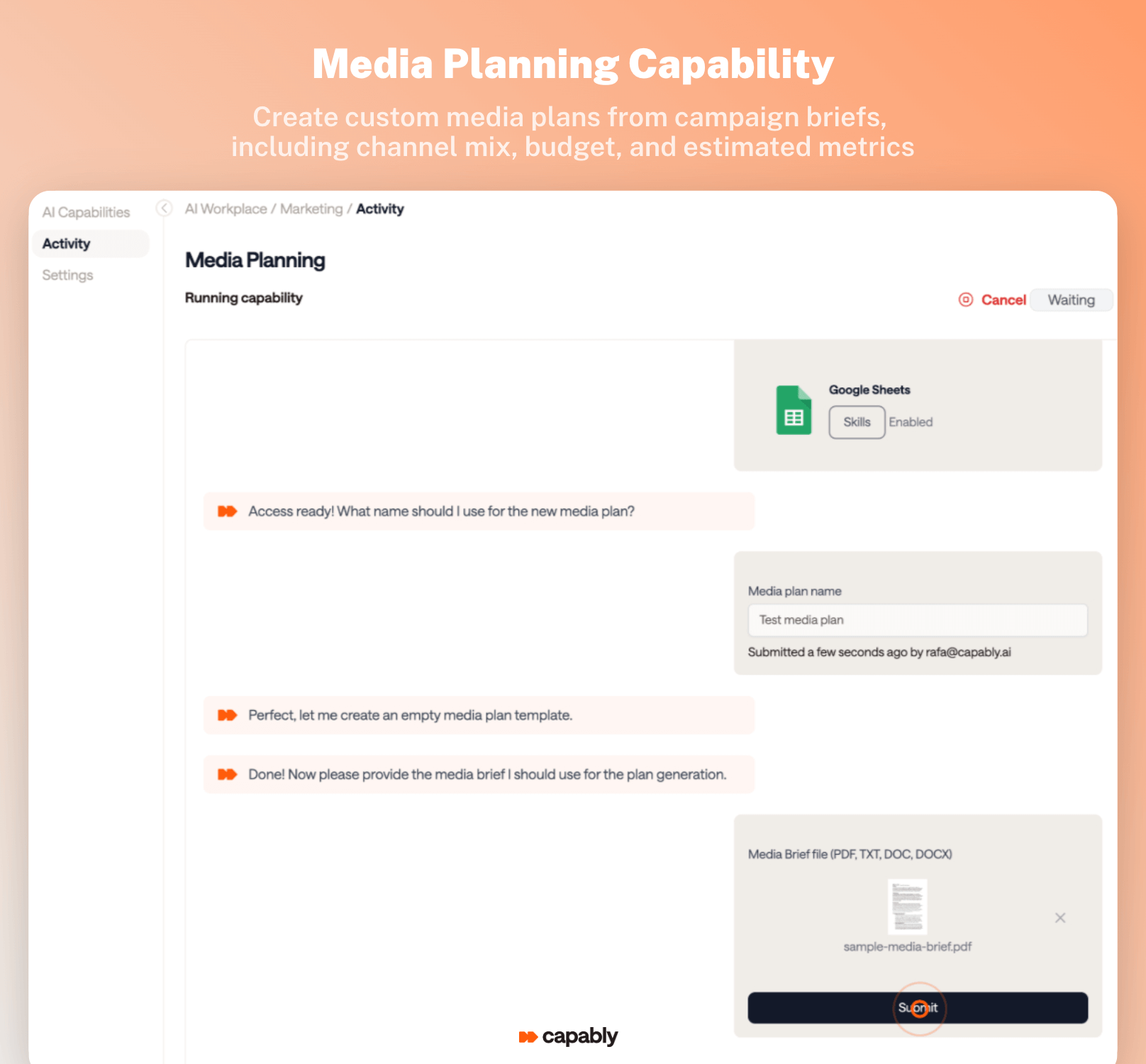
This capability takes your campaign brief and generates a tailored media plan, complete with channel mix, budget allocation, and estimated performance metrics.
The result is faster planning cycles, more consistent outputs, and fewer delays between client input and campaign execution. For agency leaders, it means strategic groundwork that supports better decision-making and clearer justification of media choices. Planning is done in minutes rather than lengthy meetings.
How to Manage AI Automation Adoption?
Let’s be honest, the word “automation” can make teams nervous. People worry about losing control, being monitored, or facing technology they do not understand. For leadership, the real challenge is adoption in marketing. In other words, making sure tools are used correctly, consistently, and with measurable impact.
Successful adoption is about change management, not just technology.
Here’s a practical approach for agencies:
1. Start Small and Show Wins
Do not try to automate everything at once. Pick one or two high-friction workflows such as campaign reporting, lead scoring, or email marketing automation. Automate enough to show immediate improvement in efficiency and accuracy.
Highlight these early wins to demonstrate value to the team. Quick, visible benefits build trust and make future automation initiatives easier to implement.
2. Involve the Team in Workflow Design
Automation works best when it reflects how teams actually work. Involve staff in mapping workflow management and identifying pain points. Let them help decide which processes to automate first.
Participation increases buy-in, reduces resistance, and uncovers smarter automation opportunities that leadership may miss. This also applies to CRM workflows like lead handoff or client follow-ups, which benefit from human insight.
3. Train for Trust, Not Just Tools
Training should focus on why automation matters, not just how to use it. Explain how automation:
Improves client-facing deliverables
Reduces repetitive manual work
Supports business growth by freeing up talent for high-value tasks
Keep training practical and concise. Avoid long slide decks. Demonstrations, short guides, and real-life examples work best for executive teams and staff alike.
4. Measure What Matters
Track meaningful metrics to show the impact of automation on operations and client outcomes. Key indicators include:
Time saved per workflow
Reduction in manual errors
Faster campaign reporting
Enhanced client satisfaction
ROI on automated marketing campaigns and lead nurturing efforts
Measuring impact converts automation from a “nice-to-have” into a business-critical function and reinforces adoption in marketing across the agency.
5. Reinforce Long-Term Adoption
Automation is not a one-time project. Continuous engagement, review, and feedback loops ensure systems remain relevant as the agency scales. Encourage staff to share successes and challenges and iterate workflows over time.
The payoff is a culture where automation is embraced as a productivity amplifier, not a threat. Teams become more strategic, clients experience higher-quality service, and long-term loyalty grows.
Done right, the automation adoption process doesn’t create distance between you and your team or your clients. It removes the noise that gets in the way of better ideas, faster delivery, and stronger partnerships. That’s the kind of change worth managing well.
Conclusion: From Burnout to Brilliance
For most media and advertising agencies, familiar pain points include shrinking deadlines, expanding scopes, and teams stretched thin. Manual processes pile up, and creative energy gets spent chasing data instead of building a strategy.
Media agency process automation is not a silver bullet. It is a practical, scalable, and increasingly accessible way to move your agency from reactive mode to proactive momentum. Smart systems handle repetitive, low-value tasks in the background, giving your team space for strategy, storytelling, and client relationship building.
By implementing automation thoughtfully, agencies can:
Optimize marketing campaigns across channels with less manual effort
Enhance the customer journey with more relevant touchpoints
Increase customer lifetime value through consistent, personalized engagement
Strengthen marketing data governance to ensure quality, security, and compliance
Drive measurable business growth without adding headcount
Automation does not replace human expertise. It protects it, ensuring your team can focus on what clients truly value. The question is no longer whether to automate, but which workflows remain manual and why.
If your agency is ready to reclaim hours, improve accuracy, and deliver superior client experiences, consider evaluating your workflows and identifying areas where AI marketing automation can create measurable impact. Start small, measure results, and scale confidently. Your clients expect more, and your team deserves the freedom to deliver it.
Continue reading